Chipmunks are small, striped rodents commonly seen in urban and suburban wildlife environments. While they may appear harmless and even charming, their presence around homes often becomes noticeable through one clear sign: droppings. Understanding Chipmunk Poop is essential for proper wildlife droppings identification, protecting your property, and maintaining hygiene and sanitation control.
This complete guide explains what chipmunk droppings look like, where they are usually found, how they compare to other rodent droppings, and whether they pose health risks. You will also learn safe droppings cleanup methods, prevention strategies, and when to seek wildlife professional help. By the end, you’ll be able to confidently identify backyard wildlife signs and take practical steps to protect your home.
What Does Chipmunk Poop Look Like?
Identifying chipmunk droppings accurately is the first step in addressing a potential issue. Many homeowners confuse them with other rodent waste, which can lead to improper treatment. Chipmunks leave behind distinct pellet-shaped droppings that provide important clues about their presence.
Small, Pellet-Shaped Droppings
Chipmunk droppings are typically rice-sized pellets measuring about ¼ inch long. These small dark pellets are cylindrical with rounded ends pellets, making them slightly softer in appearance compared to rat waste. The shape resembles grains of rice or tiny capsules.
Unlike irregular wildlife droppings, chipmunks produce consistent pellet-shaped droppings due to their plant-heavy diet of seeds, nuts, berries, and grains. This uniformity is a key part of rodent droppings comparison. When performing wildlife droppings identification, size and shape are the most reliable indicators.
Dark Brown or Black Coloration
Fresh chipmunk droppings are dark brown or black droppings with a slightly glossy appearance. Over time, they dry out and turn lighter brown or gray. If you notice color variation, it may indicate how long the droppings have been present.
The color is influenced by feeding patterns evidence. Diets rich in seeds and nuts produce darker waste. In spring and fall foraging seasons, when chipmunks actively gather food, droppings may appear more frequently and darker due to fresh consumption.
Clumped or Scattered Patterns
A scattered droppings pattern is common with chipmunks. You may find droppings near feeding areas rather than in centralized piles. Unlike rats, which sometimes use specific latrine spots, chipmunks often leave droppings near food storage or along travel routes.
Clumped droppings may appear inside burrows and tunnels or underground nesting areas. Observing patterns helps interpret wildlife behavior clues and determine activity levels.
Where Do Chipmunks Usually Leave Droppings?
Chipmunks tend to leave droppings in areas that provide both food and shelter, making their presence easier to detect. Porch and patio droppings are common, especially near bird feeders or areas where scattered seeds and nuts accumulate. These rice-sized pellets often appear in a scattered droppings pattern, revealing feeding patterns evidence and backyard wildlife signs.
They also leave droppings near entry points and foundation gaps, such as small burrow entrances or cracks in siding, where they seek shelter. Additionally, chipmunks deposit waste inside burrows and tunnels or underground nesting areas, often near small soil tunnels. Observing these locations helps homeowners track chipmunk activity, nest proximity signs, and seasonal chipmunk activity.
Near Entry Points
Droppings often appear near entry points and foundation gaps around homes. Chipmunk burrow entrances are typically small holes, about 2 inches wide, located near foundations, stairs, or patios.
If you notice garage and shed droppings close to cracks in concrete or siding, chipmunks may be using those spaces for shelter seeking behavior. Crawl space contamination can also occur if access points are not sealed properly.
Inside Burrows or Tunnels
Chipmunks create small soil tunnels and underground nesting areas for safety. Most waste accumulates within these burrows and tunnels, though some may appear near the entrance.
These tunnels are often hidden beneath shrubs or woodpiles. The absence of large soil mounds distinguishes chipmunk burrows from mole tunnels. Finding droppings nearby confirms active occupancy.
On Porches and Patios
Porch and patio droppings are common, especially near bird feeders. Bird feeder attraction significantly increases food availability for chipmunks. Scattered seeds and nuts around feeders act as feeding patterns evidence.
Outdoor trash disposal methods that leave food scraps accessible can also encourage chipmunks to linger near decks and patios.
Chipmunk Droppings vs. Other Wildlife Droppings
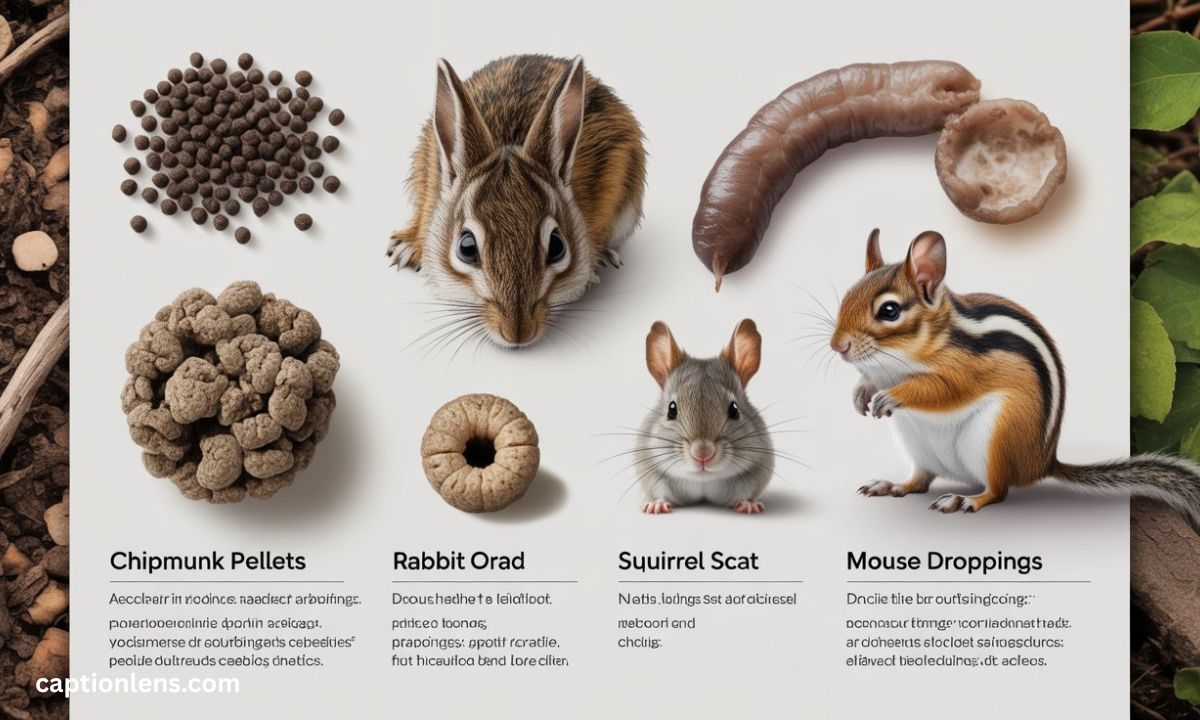
Correctly identifying chipmunk droppings is crucial to distinguish them from other wildlife and rodent droppings. Chipmunk droppings are small, rice-sized pellets with rounded ends pellets and a dark brown or black droppings color. They often appear in a scattered droppings pattern near burrows, tunnels, porches, patios, or bird feeders, providing clear wildlife behavior clues.
In comparison, mouse poop is smaller with pointed ends and is often found indoors, while squirrel droppings are larger, thicker, and sometimes curved, usually near tree bases or attics. Rat droppings are larger, blunt-ended, and may appear in centralized piles, often inside basements or sewers. Understanding these differences helps in accurate rodent droppings comparison, ensuring proper cleanup, prevention, and safe handling of wildlife droppings.
| Animal | Size | Shape | Texture | Common Location |
| Chipmunk | ¼ inch | Rice-sized pellets, rounded ends pellets | Smooth | Porches, burrow entrances |
| Mouse | ⅛–¼ inch | Pointed ends | Hard | Cabinets, attics |
| Squirrel | ⅜ inch | Thicker pellets | Slightly curved | Attics, tree bases |
| Rat | ½–¾ inch | Blunt ends | Large and thick | Basements, sewers |
This table highlights squirrel droppings difference and rat droppings identification markers. Now let’s explore each comparison in detail.
Mouse Poop
In mouse poop comparison, mouse droppings are smaller and have pointed ends. They are often found indoors in kitchens or cabinets. Unlike chipmunks, mice prefer hidden interior spaces.
Squirrel Poop
The squirrel droppings difference is mainly size. Squirrels leave larger pellets and are more likely associated with attic wildlife presence. Their droppings are often thicker and slightly curved.
Rat Poop
Rat droppings identification focuses on size and volume. Rats leave much larger waste and typically use centralized areas. The bacteria exposure risk from rat feces is also higher due to urban sewer exposure.
Why Is Chipmunk Poop Found in or Around Your Home?
Chipmunk droppings around your home usually indicate favorable conditions for shelter and food. One main reason is food availability for chipmunks bird feeders, outdoor trash, and spilled pet food attract them. During spring and fall foraging, chipmunks gather and store seeds and nuts, which increases the presence of rice-sized pellets and scattered droppings patterns near porches, patios, and yard areas.
Another factor is shelter seeking behavior. Chipmunks look for safe spaces such as garages, sheds, attics, and underground nesting areas. Droppings near burrows and tunnels, small soil tunnels, or entry points and foundation gaps indicate nest proximity signs. Observing these clues helps homeowners understand backyard wildlife signs and take preventive measures to reduce chipmunk activity.
Food Availability
Food availability for chipmunks is the primary attractant. Secure birdseed storage and pet food protection are critical. Open trash bins and spilled grain provide easy meals.Spring and fall foraging periods increase activity as chipmunks store food. This seasonal chipmunk activity leads to noticeable increases in droppings.
Shelter Seeking
Shelter seeking behavior drives chipmunks to garages, sheds, and crawl spaces. Urban and suburban wildlife adapt to human structures for warmth and protection.Foundation gaps, woodpiles, and cluttered storage areas create ideal habitats.
Nest Proximity
Nest proximity signs include small soil tunnels, scattered droppings near walls, and gnawed wires and insulation. When droppings appear consistently in one area, a nest may be nearby.
Is Chipmunk Poop Dangerous?
Chipmunk poop may seem harmless, but it can pose certain health risks if not handled properly. Rice-sized pellets, small dark pellets, and scattered droppings patterns can carry bacteria or parasites in rodent feces, which may lead to respiratory issues or infections if inhaled or touched. Bacteria exposure risk is higher when droppings are dry, as particles can become airborne and contaminate indoor spaces like attics, garages, or crawl spaces.
While the risk is generally lower than with rats, chipmunk droppings still require caution. Following safe droppings cleanup procedures using protective gloves and mask, disinfecting contaminated surfaces, and avoiding sweeping droppings helps maintain hygiene and sanitation control, keeping both your family and pets safe.
Possible Health Risks
Chipmunk droppings can pose health risks if handled improperly. Rice-sized pellets and small dark pellets may contain bacteria that cause respiratory irritation or other illnesses. Bacteria exposure risk increases when droppings dry out, as particles can become airborne and contaminate indoor spaces like attics, garages, or crawl spaces. Maintaining hygiene and sanitation control during cleanup is essential to prevent infections.
Potential Parasites
Parasites in rodent feces, including worms and protozoa, can also be present in chipmunk droppings. Direct contact with these droppings through hands, pets, or contaminated surfaces can lead to infections. Using protective gloves and mask, disinfecting contaminated surfaces, and following safe droppings cleanup procedures help minimize the risk, keeping your household safe while addressing backyard wildlife signs.
Safety Tips to Keep in Mind
When dealing with chipmunk droppings, safety is paramount to prevent bacteria exposure risk and contact with parasites in rodent feces. Always wear protective gloves and mask to avoid direct contact and inhalation of airborne particles. Maintain proper hygiene and sanitation control by washing hands thoroughly after handling droppings or contaminated tools.
Avoid sweeping droppings, as this can spread dust containing harmful pathogens. Instead, lightly spray with disinfectant before collection. Ensure pets and children are kept away from affected areas during cleanup. Following these precautions ensures safe droppings cleanup while minimizing health risks of droppings around porches, patios, burrows, or underground nesting areas.
How to Clean Up Chipmunk Droppings Safely
Cleaning up chipmunk droppings safely is crucial to protect your health and prevent the spread of bacteria or parasites in rodent feces. Handling rice-sized pellets, small dark pellets, or scattered droppings patterns without proper precautions can pose a bacteria exposure risk. Always use protective gloves and mask before beginning any cleanup process.Start by prepping the area: isolate pets, open windows for ventilation if indoors, and remove any loose debris.
Avoid sweeping droppings, as it can release harmful particles into the air. Lightly spray droppings with a disinfectant and allow them to soak. Once dampened, carefully collect and place them in a sealed bag. Disinfecting contaminated surfaces afterwards ensures hygiene and sanitation control, and proper disposal in outdoor trash bins completes the safe cleanup process. Following these steps reduces health risks while maintaining a clean environment around your home.
Step 1: Prep the Area
Before handling chipmunk droppings, preparing the area is essential for safety. Put on protective gloves and a mask to reduce exposure to bacteria and parasites in rodent feces. Keep pets and children away from the affected space to prevent accidental contact.
If indoors, open windows or doors for ventilation to minimize inhaling any airborne particles. Proper prep sets the foundation for safe droppings cleanup and ensures hygiene and sanitation control while you remove rice-sized pellets, scattered droppings patterns, and other wildlife droppings safely.
Step 2: Avoid Sweeping
When cleaning up chipmunk droppings, it’s important to avoid sweeping, as this can release harmful particles into the air. Rice-sized pellets and dried feces may contain bacteria or parasites in rodent feces, posing a bacteria exposure risk.
Instead, lightly spray the droppings with a disinfectant to dampen them before removal. Using this method prevents airborne contamination and ensures safe droppings cleanup. Always wear protective gloves and mask to further protect yourself during this process, maintaining proper hygiene and sanitation control.
Step 3: Disinfect the Surface
Once chipmunk droppings have been safely collected, disinfecting contaminated surfaces is crucial to eliminate bacteria exposure risk. Use a bleach solution or commercial disinfectant to thoroughly clean areas where rice-sized pellets or small dark pellets were found. This step reduces the chance of parasites in rodent feces spreading to humans or pets.
Spray the disinfectant generously over porches, patios, burrow entrances, or any indoor areas affected, allowing it to sit for several minutes before wiping. Proper disinfecting contaminated surfaces ensures safe droppings cleanup and maintains hygiene and sanitation control around your home.
Step 4: Dispose Properly
After safely collecting chipmunk droppings, proper disposal is essential to prevent bacteria exposure risk and parasites in rodent feces from spreading. Place all droppings and contaminated materials into a sealed plastic bag, then double-bag to ensure no leaks occur.
Dispose of the bags in an outdoor trash bin with a secure lid, following outdoor trash disposal methods that minimize wildlife access. This final step completes safe droppings cleanup and helps maintain hygiene and sanitation control around your home, reducing the chance of contamination in garages, sheds, patios, or crawl spaces.
Preventing Chipmunks From Leaving Droppings Around Your Home
Preventing chipmunks from leaving droppings around your home is easier than constant cleanup. The first step is sealing entry points using wire mesh and caulk sealing to block access to attics, garages, crawl spaces, and burrow entrances. Inspect foundation gaps, vents, and siding to ensure no openings remain for shelter seeking behavior.
Next, keep food sources secure. Store birdseed in sealed containers, clean up spilled seeds, and protect pet food. Trimming vegetation near walls reduces cover, making your property less attractive. Using natural chipmunk deterrents such as peppermint oil repellent or clove scent deterrent adds another layer of prevention, helping maintain hygiene and sanitation control while discouraging chipmunks humanely.
Seal Entry Points
Inspect your home for foundation gaps, crawl space openings, and small cracks. Use wire mesh and caulk sealing to block chipmunk burrow entrances. Properly sealed entry points prevent chipmunks from accessing garages, attics, or sheds.
Keep Food Sources Secure
Chipmunks are drawn to easy meals. Secure birdseed storage, clean up feeder spills, and protect pet food indoors. Outdoor trash disposal methods that leave food accessible should be avoided to reduce food availability for chipmunks.
Trim Vegetation
Trimming vegetation near walls, foundations, and patios is an effective way to discourage chipmunks from settling close to your home. Overgrown shrubs and plants provide cover, making it easier for chipmunks to approach entry points and create small soil tunnels. By keeping plants trimmed, you reduce hiding spots and limit shelter seeking behavior.
Regular maintenance also supports other preventive measures like sealing entry points with wire mesh and caulk. Combined with safe droppings cleanup and secure birdseed storage, trimming vegetation near walls helps control backyard wildlife signs and minimizes the risk of property damage, crawl space contamination, and attic wildlife presence.
Use Gentle Deterrents
Natural chipmunk deterrents are a safe and humane way to discourage chipmunks from entering your yard or home. Peppermint oil repellent and clove scent deterrent are effective options, as chipmunks dislike strong odors but remain unharmed. Spraying these near burrow entrances, porches, patios, and around bird feeders can reduce feeding patterns evidence and scattered droppings patterns.
Other gentle deterrents include motion-activated sprinklers or placing mesh barriers around plants and birdseed storage. Combined with trimming vegetation near walls and sealing entry points with wire mesh and caulk sealing, these strategies help prevent shelter seeking behavior and protect your home from property damage signs without causing harm to wildlife.
Signs You May Have a Chipmunk Problem Beyond Just Droppings
While droppings are the most obvious indicator, several other signs reveal a chipmunk problem around your home. Observing gnawed items such as wires, insulation, or wooden structures signals property damage signs and possible attic wildlife presence. Small soil tunnels near foundations or under decks indicate active burrows and tunnels. Scattered seeds and nuts around bird feeders or patios reveal feeding patterns evidence and nest proximity signs.
Other clues include porch and patio droppings, bird feeder attraction, and signs of shelter seeking behavior like burrow entrances near foundation gaps. Recognizing these indicators early allows for preventive measures such as sealing entry points, trimming vegetation near walls, and using natural chipmunk deterrents to maintain hygiene and sanitation control.
Gnawed Items
Gnawed items around your home are a strong indication of chipmunk activity and potential property damage signs. Chipmunks chew on wires, insulation, wooden structures, and even garden items to maintain their ever-growing teeth and create access to burrows. Observing these signs alongside rice-sized pellets and scattered droppings patterns confirms active territory marking behavior.
Such damage is most commonly found in attics, garages, sheds, and near crawl spaces. Early detection allows homeowners to take preventive measures like sealing entry points with wire mesh and caulk, using natural chipmunk deterrents, and protecting pet food and birdseed storage to minimize further harm.
Small Tunnels
Small soil tunnels are another significant sign of chipmunk activity. These burrows and tunnels provide underground nesting areas that offer protection and territory marking behavior. Tunnel entrances are typically located near foundation gaps, shrubs, or woodpiles and are accompanied by scattered droppings and occasional gnawed items.
Identifying these tunnels helps homeowners implement sealing entry points, trimming vegetation near walls, and other humane wildlife removal strategies to prevent further property damage signs.
Scattered Seeds or Nuts
Scattered seeds and nuts around your yard are a clear indicator of chipmunk feeding patterns evidence. Chipmunks often carry food from bird feeders or natural sources to nearby burrows and tunnels, leaving rice-sized pellets and leftover seeds behind.
Observing these scattered droppings patterns alongside small dark pellets can help pinpoint active feeding zones and nest proximity signs. This evidence not only confirms chipmunk presence but also reveals preferred areas for shelter seeking behavior.
When to Consider Professional Help
Homeowners should consider professional help when chipmunk activity becomes difficult to manage on their own. Signs include persistent droppings issue, gnawed wires and insulation, small soil tunnels, or damage to property that indicates active burrows and tunnels. These situations may also involve crawl space contamination, attic wildlife presence, or garage and shed droppings that are hard to address safely.
Professional wildlife experts provide humane wildlife removal and accurate rodent droppings comparison, ensuring proper identification. They can also advise on sealing entry points, implementing natural chipmunk deterrents, and maintaining hygiene and sanitation control to prevent future backyard wildlife signs.
Persistent Droppings
Persistent droppings indicate ongoing chipmunk activity that may require more than basic prevention measures. When rice-sized pellets appear repeatedly near burrows, porches, or bird feeders, it signals that chipmunks are regularly accessing food and shelter around your home. Scattered droppings patterns combined with small soil tunnels confirm active burrow entrances and feeding patterns evidence.
Ignoring a persistent droppings issue can increase the risk of bacteria exposure and parasites in rodent feces. Consistent observation, safe droppings cleanup, and, if needed, wildlife professional help ensure humane wildlife removal and long-term hygiene and sanitation control, keeping your property and family safe.
Damage to Property
Chipmunks may seem harmless, but persistent activity can lead to noticeable property damage signs. They often gnaw wires and insulation in attics or garages, creating potential safety hazards. Small soil tunnels near foundations or under decks can undermine landscaping and contribute to crawl space contamination.
Droppings combined with gnawed items indicate active chipmunk burrow entrances and territory marking behavior. Over time, unchecked activity can escalate, affecting porches, patios, and outdoor storage areas. Recognizing these warning signs early allows homeowners to take preventive measures like sealing entry points and using natural chipmunk deterrents to protect their property effectively.
Uncertainty About the Droppings
Sometimes homeowners may find droppings and feel uncertain about their origin. Rice-sized pellets could belong to chipmunks, mice, or even squirrels, making rodent droppings comparison essential. Dark brown or black droppings near porches, patios, or burrows might indicate chipmunk activity, but without clear identification, it’s easy to misjudge.
If you face uncertainty about the droppings, it’s safest to avoid direct contact and follow safe droppings cleanup practices. Consulting a wildlife professional help service ensures accurate identification, confirms territory marking behavior, and provides guidance for humane wildlife removal while preventing property damage signs.
Understanding Chipmunk Behavior Through Droppings
Chipmunk droppings are more than just waste they are a window into wildlife behavior clues. By examining the size, shape, and location of pellet-shaped droppings, homeowners can learn about territory marking behavior and preferred feeding zones. Rounded ends pellets and scattered droppings patterns often indicate active chipmunk travel routes and burrow entrances.
In addition, the frequency and placement of droppings reveal seasonal chipmunk activity and nest proximity signs. Observing droppings near porches, patios, or underground nesting areas can help identify shelter seeking behavior and feeding patterns evidence. Understanding these signs allows for informed prevention and humane wildlife removal strategies, keeping your home safe and clean.
Territory Marking
Chipmunks use subtle territory marking behavior to establish boundaries within their environment. While they do not rely on droppings as heavily as some animals, chipmunk droppings can still appear along regular travel routes near chipmunk burrow entrances. These small dark pellets may outline pathways between feeding spots and underground nesting areas.
A scattered droppings pattern near entry points and foundation gaps can signal an active territory. This helps explain repeated sightings of rice-sized pellets in the same locations. Recognizing these wildlife behavior clues allows homeowners to better understand movement zones and reduce conflict through sealing entry points and habitat adjustments.
Feeding Patterns
Chipmunk droppings often provide clear feeding patterns evidence that helps homeowners understand what attracts them. When food availability for chipmunks is high—such as near bird feeders or outdoor trash bins you may notice a scattered droppings pattern mixed with scattered seeds and nuts. These small dark pellets typically appear close to active feeding spots rather than far from them.
During spring and fall foraging, chipmunks intensify their food collection efforts, increasing visible droppings near burrows and tunnels. Their diet of grains, berries, and stored nuts directly influences the size and color of rice-sized pellets. Observing these feeding patterns evidence offers valuable wildlife behavior clues about where and why chipmunks are active around your home.
Seasonal Clues
Seasonal chipmunk activity plays a major role in how often you notice chipmunk droppings around your home. During spring and fall foraging, food availability for chipmunks increases as they gather and store seeds. This often leads to more visible small dark pellets near burrows and tunnels or feeding areas.
In colder months, droppings may appear less frequently outdoors but can accumulate near sheltered spaces like garages or crawl areas. Changes in feeding patterns evidence and shelter seeking behavior help explain these shifts. By paying attention to these seasonal clues, you can better predict and manage backyard wildlife signs.
An Analogy: Droppings as Nature’s Breadcrumb Trail
Chipmunk droppings can be compared to a breadcrumb trail left behind in nature. Just like breadcrumbs show the path someone has taken, a scattered droppings pattern reveals movement routes, feeding spots, and nest proximity signs. These small dark pellets quietly map out wildlife behavior clues around your yard.
By observing where rice-sized pellets appear near burrows and tunnels, porch corners, or bird feeders you can trace feeding patterns evidence and seasonal chipmunk activity. In this way, chipmunk droppings act as a natural tracking system, helping homeowners understand backyard wildlife signs without ever seeing the animal itself.
Frequently Asked Questions
What Does Chipmunk Poop Look Like?
Chipmunk poop consists of small, rice-sized pellets with rounded ends. They are dark brown or black droppings, often found in a scattered droppings pattern.
Where Do Chipmunks Usually Leave Droppings?
Chipmunks leave droppings near burrow entrances, foundation gaps, porches, patios, and bird feeders, often in small tunnels or underground nesting areas.
How Is Chipmunk Poop Different from Mouse, Squirrel, or Rat Droppings?
Chipmunk droppings are smaller, rice-sized, and rounded. Mouse poop is tiny with pointed ends, squirrel droppings are thicker, and rat droppings are large and blunt.
Why Is Chipmunk Poop Found in or Around Your Home?
Droppings appear due to food availability, shelter seeking behavior, and nest proximity signs, especially near bird feeders, garages, porches, and foundation gaps.
Is Chipmunk Poop Dangerous?
Chipmunk droppings may carry bacteria or parasites in rodent feces, posing minor health risks if inhaled, touched, or left in crawl spaces and attics.
How Do You Clean Up Chipmunk Droppings Safely?
Wear protective gloves and mask, avoid sweeping droppings, disinfect contaminated surfaces, and dispose properly in sealed trash bags outdoors.
How Can You Prevent Chipmunks from Leaving Droppings Around Your Home?
Seal entry points, secure birdseed and pet food, trim vegetation near walls, and use natural chipmunk deterrents like peppermint oil or clove scent.
When Should You Consider Professional Help for Chipmunks?
Seek wildlife professional help if droppings persist, property damage appears, tunnels are found, or droppings are uncertain and difficult to identify safely.
What Other Signs Indicate a Chipmunk Problem?
Look for gnawed items, small soil tunnels, scattered seeds or nuts, porch and patio droppings, and burrow entrances near foundation gaps.
What Can Chipmunk Droppings Tell You About Their Behavior?
Droppings reveal territory marking behavior, feeding patterns evidence, seasonal chipmunk activity, and nest proximity signs around yards, porches, and underground nesting areas.
Conclusion
Chipmunk droppings may seem minor, but they provide critical insights into wildlife behavior clues around your home. By learning proper wildlife droppings identification, comparing rodent droppings accurately, and practicing safe droppings cleanup, you protect both your health and property.
Prevention strategies like sealing entry points, trimming vegetation near walls, and using natural chipmunk deterrents reduce recurring issues. If problems persist, wildlife professional help ensures humane wildlife removal and long-term hygiene and sanitation control.

Hery Jack with 2 years of experience in creating captivating caption articles, crafts engaging, inspiring, and relatable content that resonates with readers and enhances social media presence. He specializes in crafting content that is relatable, meaningful, and shareable, helping individuals and brands enhance their social media presence.